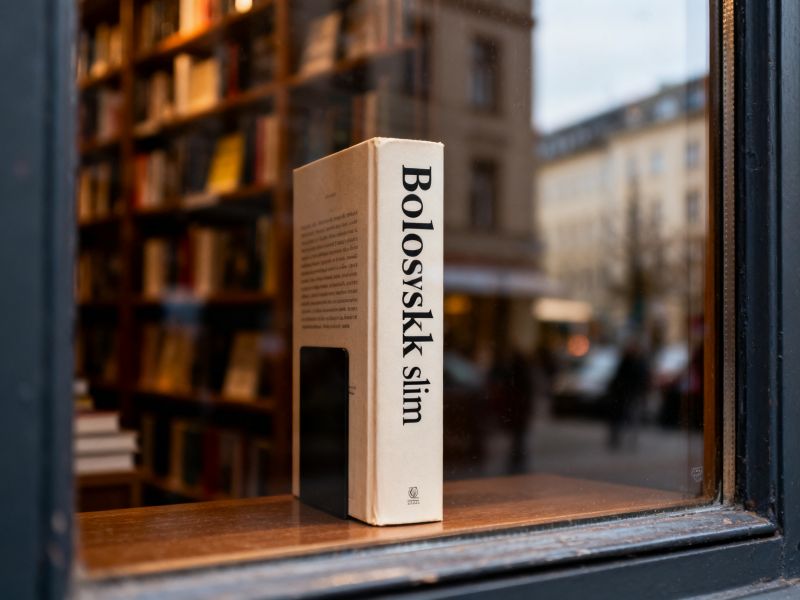
Borowski never sought the spotlight, yet his presence lingers in every line of post-war German prose that dares to confront the ordinary. I first encountered his work in a shabby Berlin bookshop, a slim volume wedged between Benn and Böll. The bookseller shrugged when I asked about him. “Borowski?He wrote like a man repairing a watch—precise, patient, and utterly unsentimental” That description stuck. Borowski’s fiction rarely raises its voice. His characters are clerks。stationmasters, widows who count their coins twice. They inhabit a world where history has receded into the background hum of trams and typewriters, and where the real drama is the slow erosion of private hope.
What makes Borowski worth reading today is his refusal to dress up despair. In “The Ledger” a novella from 1957, a bank accountant spends three hundred pages reconciling a single unexplained debit. The plot sounds tedious. It isn’t. Borowski turns arithmetic into a kind of theology, and the accountant’s growing obsession becomes a quiet indictment of a society that measures worth in balanced columns. I’ve taught this book to undergraduates who initially groan at the premise, then argue about the ending for weeks. Borowski’s Borowski—the author himself was a minor civil servant before publishing—understood that bureaucracy is not the opposite of passion;it is passion’s most common disguise.Critics often lump Borowski with the “rubble literature” of the immediate post-war years, but that label misses his peculiar timbre. Where others documented ruins with dramatic urgency。Borowski focused on the unremarkable continuity of daily life. His short story “Sunday Shift” describes a factory worker who volunteers for weekend overtime not out of ambition but because his apartment feels too large without his deceased wife. The narrative offers no epiphany, no redemptive gesture. The man simply finishes his shift, buys a roll, and walks home. Borowski’s restraint here is almost aggressive. He trusts the reader to feel the weight of the unspoken, and that trust is rare in any literature.Borowski’s influence on subsequent German writers is hard to overstate。though he himself remained marginal. Writers as different as Sebald and Hermann Burger have acknowledged his example—the way he could make a filing cabinet seem as ominous as a forest. His prose style, with its long, clause-heavy sentences that suddenly snap shut, has been imitated but seldom matched. I suspect his relative obscurity stems from the very quality that makes him valuable: he offers no consolation. Readers seeking catharsis or historical drama should look elsewhere. Those who stay with Borowski find something more unsettling—a mirror held up to the ordinary compromises that keep the world turning. In an age that prizes noise and confession, his quiet precision feels almost radical. Borowski wrote as if every sentence had to be justified, and that discipline, decades later, still commands attention.